
MOZ 06 - TO EDUCATE A WOMAN IS TO EDUCATE A NATION

Project Location
The project takes place in the Mangunde mission, a rural region in the Chibava district of Sofala province. Most of the adult population is illiterate, and young women lack access to education due to lack of economic opportunities and the long distances they travel.
According to the 2017 population census, the Chibava district has a total population of 135,202, with a young population (43% under 15), predominantly female, and predominantly rural. The Mangunde region is very poor; people live on subsistence agriculture, with no prospect of steady employment due to the lack of factories and any public facilities. The only employees are school teachers and health center staff. Access roads are very poor, making transit difficult during the rains, the local market is very poor, and internet connections are very poor.
The Mangunde mission operates a school for elementary school through grade 12.
Project description
Schooling in Mozambique faces significant challenges, despite progress made in expanding access to education. The education system, which underwent reforms after independence in 1975, still struggles with quality, funding, and regional disparities. Although primary school is compulsory, many students do not complete it, and secondary education faces access and infrastructure challenges.
Mozambican women face numerous challenges, including often inadequate education, the burden of domestic and care work, and a high vulnerability to gender-based violence due to social inequality and patriarchy.
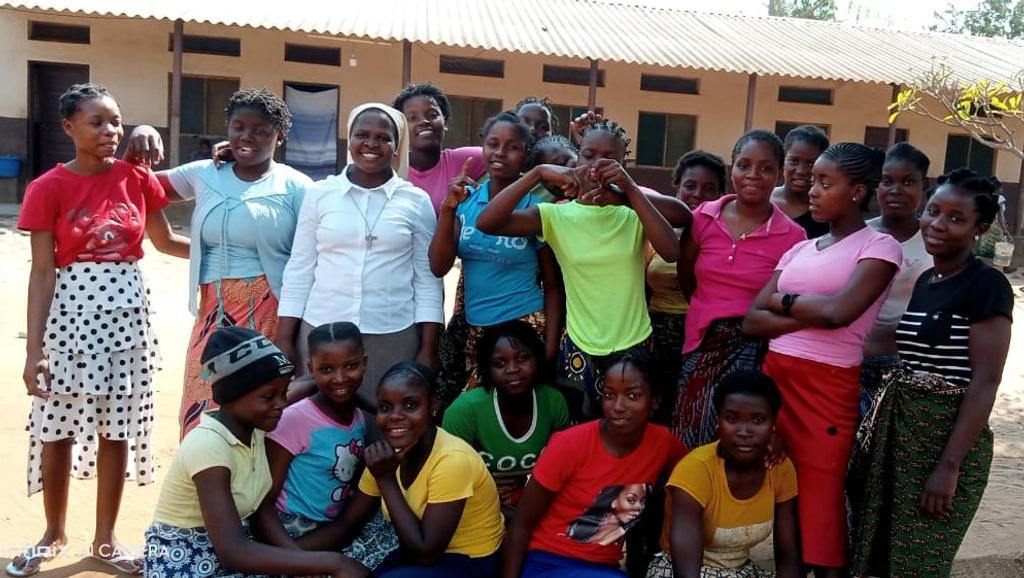
As Comboni Sisters, we continue to believe in the importance of education for the country's development, which is why we want to continue helping girls study by offering them the opportunity to live in the Lar during the school year. Our Lar in Mangunde currently hosts approximately 100 girls from neighboring communities and the city.
Objectives
- Promote access to school for the most vulnerable young women
- Welcome these young women, giving them the opportunity to study in a safe, simple, yet dignified environment
- Support these girls with a comprehensive education for a better future
- Improve their nutrition and support their basic needs, ensuring good academic performance.
Beneficiaries
Direct: 10 poor but deserving girls students who will benefit from scholarships
Indirect: their families, the other girls in the Lar, and society at large
Local Contribution
The girls help with the services needed to keep the Lar clean (cleaning the dormitories, dining hall, and kitchen, and tending the garden). They also search the forest for firewood for cooking. They have a small vegetable garden and make biscuits, which they sell to help cover their expenses. Families also help by offering local products.
Referent sister of the project: Sr. Harriet Draru
Project's costs